Why a House of Leaves Film Adaptation Could Ruin Its Mystique
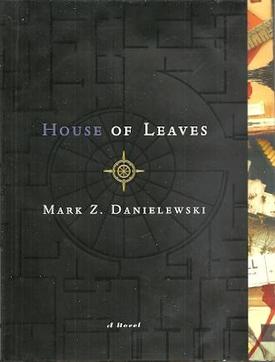
Mark Z. Danielewski's *House of Leaves* is more than just a book; it's an experience. A sprawling, terrifying, and profoundly innovative work of experimental fiction, it has garnered a fiercely devoted cult following since its publication. For years, fans have debated the possibility of a *house of leaves movie* adaptation. While the allure of seeing the terrifying, impossibly expanding house on screen is undeniable, a closer look reveals that a direct cinematic translation might not only be impossible but could also fundamentally strip away the very mystique that makes the novel so powerful. The book's genius lies in its untranslatable form, making a straightforward *house of leaves movie* a perilous endeavor.
The Unfilmable Form: Why *House of Leaves* Resists Adaptation
At its core, *House of Leaves* is a nested narrative, a labyrinth of perspectives that weaves together the story of a blind man, Zampanò, who writes an academic analysis of a fictional documentary film called "The Navidson Record." This film documents the surreal experiences of theidson family in their new home, which mysteriously develops impossible interior spaces. Overlaying Zampanò's meticulously footnoted analysis is Johnny Truant's chaotic, increasingly disturbed account of discovering and editing Zampanò's manuscript, interspersed with the wry, often academic comments of "the editors" and countless other sourced quotations.
This multi-layered narrative presents an immediate and formidable challenge for any *house of leaves movie* adaptation. The book features no fewer than four distinct narrative voices directly addressing the reader:
* **Zampanò's academic voice:** Dry, meticulous, and seemingly objective, yet full of subtle biases and inconsistencies.
* **Johnny Truant's visceral confessions:** Raw, emotionally charged, and descending into madness, offering personal insights that drive much of the reader's engagement.
* **"The Editors'" meta-commentary:** Providing context, challenging Truant, and adding another layer of critical distance.
* **Navidson's own perspective (and others) through the "film" itself:** Offering fragments of direct experience.
In the novel, Truant constantly narrates his inner turmoil, fears, and observations directly to the reader. To replicate this on film would likely necessitate constant, almost non-stop voiceover narration, which even in well-executed examples like *Fight Club*, would struggle to convey the sheer depth and complexity of Truant's mental unraveling. A film typically relies on visual storytelling and dialogue to convey character emotion and plot progression. *House of Leaves*, however, uses the very *act* of reading Truant's scattered thoughts and desperate pleas as a key component of its psychological horror. The narrative density and the distinct *purposes* of each voice are paramount; to simplify or streamline them for a visual medium risks flattening the story and losing its intricate thematic resonance. For a deeper dive into these narrative hurdles, explore
House of Leaves Movie: Unpacking Its Unfilmable Narrative Challenges.
A Labyrinth of Text: The Untranslatable Design
Perhaps the most significant reason a *house of leaves movie* would fail to capture the book's essence lies in the fact that *House of Leaves* is meticulously *designed to be a book*. Its physical form, typography, and layout are not mere stylistic choices; they are integral to the story, the themes, and the reader's immersive experience. Consider:
* **Footnotes and References:** The book is dense with footnotes, many of which contain their own mini-narratives, academic citations (real and fictional), and critical commentary. These footnotes often reference other footnotes, creating a rabbit hole that mirrors the impossibly expanding house itself. A film cannot easily replicate this parallel narrative structure without resorting to awkward on-screen text overlays or constant pauses.
* **Typographical Experiments:** Danielewski employs an astounding array of typographical acrobatics. Text might be turned sideways, upside down, mirror-imaged, or written in bizarre shapes (like the infamous "Labyrinth" chapter, which literally requires the reader to rotate the book to follow the twisting narrative). Words disappear, appear in different colors, or are scattered across pages, visually mimicking the disorientation and dread experienced by the characters.
* **Echoing Form and Content:** Each chapter's presentation often echoes its subject matter. A chapter describing the house's claustrophobic corridors might feature dense, compressed text blocks, while one about a vast, empty space might have only a few words per page, floating amidst white space. This visceral connection between the reader's physical interaction with the book and the story's content is central to its power.
These elements aren't "additional" to the story; they *are* the story. They challenge the very nature of reading, forcing active engagement, physical manipulation of the book, and even eye strain, all of which contribute to the reader's sense of unease and immersion. A film, being a largely passive visual medium, simply cannot replicate this unique, interactive dynamic. How do you translate a footnote that leads to another footnote on a different page, or the feeling of turning a book upside down to follow a character's descent into a textual labyrinth, onto a flat screen? These specific literary devices are fundamentally print-based, making a faithful *house of leaves movie* adaptation of these aspects inherently impossible. Delve deeper into these design challenges by reading
The Untranslatable Design: Why a House of Leaves Movie Fails.
Preserving the Mystique: The Perils of Commercialization
Beyond the technical and structural impossibilities, there's a strong argument to be made that a mainstream *house of leaves movie* could inadvertently destroy the very mystique that surrounds the novel. *House of Leaves* thrives in its niche, demanding intellectual effort and a willingness to engage with unconventional storytelling. It's a book that rewards rereading and discussion, fostering a deep, almost personal relationship with its audience.
A commercial film adaptation, by its very nature, often seeks to broaden appeal, simplify complex narratives, and provide a definitive visual interpretation. This process could easily strip away the ambiguity, intellectual challenge, and experimental edges that define *House of Leaves*. The "commercial buzz" and the need for a marketable plot could reduce the rich, layered psychological horror to a more conventional haunted house story, losing the philosophical and meta-fictional critiques inherent in the text.
The novel's strength lies in its ability to haunt the reader's imagination, allowing individual minds to fill in the gaps and interpret its many ambiguities. A film, with its fixed visuals and singular sound design, would impose a specific vision, potentially robbing readers of their personal connection to the story and replacing their carefully constructed mental images with a director's definitive interpretation. This isn't to say a *movie based on* *House of Leaves* (perhaps exploring a tangential story within its universe) couldn't work, but a direct, straightforward adaptation risks diluting the profound impact of the original.
The Soundtrack Dilemma: Imposed Soundscapes vs. Personal Immersion
An interesting point raised in discussions about a *house of leaves movie* concerns its potential soundtrack. Some argue that while a film would inevitably have a score, it should never actually appear *in the movie itself*. This seemingly paradoxical idea highlights another unique aspect of the book: it often inspires readers to create their own accompanying soundscapes, whether consciously or subconsciously.
Many readers listen to specific music while immersing themselves in Danielewski's world, curating an auditory experience that enhances their personal journey through the text. A fixed film soundtrack, however expertly crafted (and there are certainly artists like Trent Reznor or bands like Godspeed You! Black Emperor who could create something atmospheric), would dictate the mood and pace, overriding this personal, imaginative engagement. The book allows for a fluid, individual pacing; a film's soundtrack is an immutable, imposed element, further cementing a singular interpretation where the book encourages a multiplicity.
Could *Any* Adaptation Work? Exploring Alternatives (and their limitations)
While a direct *house of leaves movie* adaptation seems fundamentally flawed, the enduring fascination with the book sparks ideas for alternative interpretations. Could an interactive digital experience, a complex video game, a multi-part miniseries, or a virtual reality exploration come closer? Perhaps these mediums could better replicate the choice-driven, non-linear, and physically engaging aspects of reading the novel. However, even these alternatives face immense hurdles in capturing the raw, tactile experience of turning pages, deciphering unconventional layouts, and wrestling with the physical object of the book itself. The power of *House of Leaves* is intrinsically tied to the act of reading a physical text.
Conclusion
Ultimately, the argument against a *house of leaves movie* is not one of quality or potential talent, but of fundamental incompatibility between forms. Mark Z. Danielewski crafted a masterpiece designed to exploit the unique properties of print, making the reader an active participant in a bewildering, terrifying journey. To translate this into a passive visual medium like film would necessitate the excision of its most defining characteristics – its multi-layered narration, its innovative typography, and its deliberate ambiguity. While the temptation to bring "The Navidson Record" to life on screen is strong, attempting a full *house of leaves movie* adaptation risks stripping away the very mystique and intellectual challenge that has cemented its status as a literary landmark, potentially leaving behind a hollow echo of its brilliant, untranslatable self. Some stories are best told, and experienced, exactly as they were written.