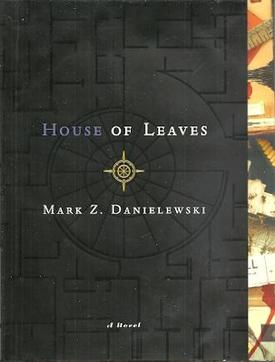
House of Leaves Movie: Unpacking Its Unfilmable Narrative Challenges
Mark Z. Danielewski's House of Leaves is more than just a novel; it's an experience. A labyrinthine odyssey into architectural horror, psychological unraveling, and meta-textual experimentation, it has captivated readers worldwide since its release. Naturally, with such a devoted following and a compelling central premise—a family discovering a perpetually growing, impossible void within their home—the question frequently arises: why hasn't there been a House of Leaves movie? While the allure of seeing this iconic story brought to the big screen is undeniable, the prevailing sentiment among fans and critics alike is that the book is, for all intents and purposes, unfilmable. This isn't merely a lack of imagination, but a deep understanding of how intrinsically tied the narrative is to the very medium of the book itself. Unpacking these challenges reveals why a direct film adaptation would likely fall short of capturing the novel's unique genius.
The Labyrinth of Narratives: More Than Just Voice-Overs
One of the primary hurdles for any potential House of Leaves movie lies in its incredibly complex, multi-layered narrative structure. The book is not just a story; it's a collection of interconnected, often contradictory, texts:
- Johnny Truant's Confessions: The main narrator, a tattoo parlor apprentice who discovers the manuscript of Zampano. Truant's story is a descent into madness, filled with footnotes, personal anecdotes, and raw, unfiltered emotions directly addressed to the reader.
- Zampano's Manuscript: An academic, albeit fictional, exploration of "The Navidson Record," a documentary about a family encountering a bizarre, expanding house. Zampano's text is formal, analytical, yet riddled with its own unreliable observations and increasingly frantic notes.
- The Editors' Interventions: A seemingly objective layer, providing footnotes and commentary on both Truant and Zampano, attempting to lend structure but often adding further layers of ambiguity.
- The Navidson Record Itself: While existing as Zampano's subject, the "documentary" footage and interviews recounted offer yet another perspective on the impossible house.
Translating this cacophony of voices to film presents an almost insurmountable task. How do you convey Truant's constant, intimate narration and his deteriorating mental state without resorting to non-stop, potentially exhausting voice-overs? Even critically acclaimed films like Fight Club, known for their strong narrative voice, only scratch the surface of the sheer volume and emotional depth of Truant's internal monologue. Furthermore, how would a director visually distinguish between Zampano's scholarly analysis, Truant's manic digressions, and the seemingly neutral (but inherently subjective) editor's notes? The film would have to simultaneously present multiple, often conflicting, realities, risking overwhelming or alienating the audience. The very act of reading House of Leaves requires active engagement with these disparate voices; a passive cinematic experience struggles to replicate this.
When the Medium is the Message: The Book's Indispensable Design
Perhaps the most compelling argument against a House of Leaves movie adaptation is that the book is meticulously designed to exist purely as a printed text. Danielewski doesn't just tell a story; he uses the physical properties of the book as a narrative device, making the medium itself an integral part of the horror and mystery. Consider these unique elements:
- Typographical Play: Words scattered across pages, upside-down text, text mirrored, text printed in different colors, blank pages conveying silence or absence.
- Footnotes and Cross-References: An intricate web of real and fabricated academic references, sometimes stretching for pages, disrupting the main narrative and forcing the reader to navigate parallel storylines.
- Shifting Layouts: Chapters that visually mimic their subject matter. The infamous "Labyrinth" chapter, for instance, is printed in a sprawling, multi-directional pattern, forcing the reader to physically turn the book, creating a visceral sense of disorientation and entrapment.
- The Physicality of the Book: The sheer weight, the sensation of turning its irregular pages, the act of hunting for footnotes or deciphering fragmented text—all contribute to an experience of tactile horror and intellectual engagement that cannot be replicated on screen.
These aren't mere stylistic flourishes; they are fundamental to the narrative. They create a sense of being lost within the text, mirroring the characters' experience within the house. A film, by its very nature, provides a linear, two-dimensional interpretation. It cannot force a viewer to physically manipulate their viewing device or pause to delve into extended "footnotes" without breaking immersion or becoming cumbersome. The meta-commentary on how stories are written, read, and interpreted—a core theme of House of Leaves—is deeply embedded in this interactive textual design. To strip these elements away for a straightforward cinematic narrative would be to fundamentally alter its essence and diminish its unique power. For a deeper dive into this, explore The Untranslatable Design: Why a House of Leaves Movie Fails.
Preserving the Mystique: The Perils of Commercial Adaptation
Beyond the structural impossibilities, there's a strong argument to be made that a commercial House of Leaves movie would inevitably "destroy the whole mystification" that makes the book so special. Danielewski himself has reportedly expressed reluctance for an adaptation, understanding that certain works are best left to their original medium.
Hollywood, driven by box office success, often simplifies complex narratives, imposes definitive visual interpretations, and streamlines ambiguous elements for broader appeal. This approach would be catastrophic for House of Leaves, a book whose horror stems from its ambiguity, its intellectual demands, and its ability to conjure deeply personal terrors within each reader's imagination. A film would necessarily choose *one* look for the house, *one* performance for Johnny Truant, *one* definitive interpretation of the labyrinth. This would strip away the reader's active role in constructing their own terrifying vision, reducing a deeply personal experience to a passive, perhaps even generic, horror film.
The book thrives on its cult status, its word-of-mouth reputation, and the intimate, often solitary, experience of navigating its pages. Commercializing it into a mainstream film could easily flatten its subversive edges, dilute its philosophical underpinnings, and replace its unique unsettling atmosphere with conventional jump scares or overt explanations. For more on this, check out Why a House of Leaves Film Adaptation Could Ruin Its Mystique.
Beyond Adaptation: What Alternatives Could Work?
While a direct House of Leaves movie seems ill-advised, the enduring appeal of the story begs the question: could any form of visual media engage with its themes? Instead of a straight adaptation, perhaps alternative approaches could capture aspects of its spirit:
- Experimental Short Films or Art Installations: Small-scale, non-linear projects focusing on specific scenes or narrative fragments, allowing for artistic interpretation without the burden of full adaptation.
- An Interactive Digital Experience: A video game or immersive web experience that forces the user to navigate a multi-layered interface, mimicking the book's physical interaction and fragmented narrative.
- A "Mockumentary" of "The Navidson Record": Focusing solely on the story-within-the-story, presenting it as a found-footage horror documentary, free from Truant's or Zampano's direct narratives. This would be "based on" HoL, but not an adaptation of the entire book.
- A Limited Series Focusing on Truant's Descent: While still challenging, a multi-episode series could allow more time to develop Truant's psychological unravelling and incorporate his internal monologues, perhaps even visually representing some of the book's textual quirks.
Even these alternatives would struggle to replicate the full, singular experience of reading House of Leaves. They would, by necessity, be interpretations or homages, rather than faithful adaptations.
In conclusion, the dream of a House of Leaves movie, while enticing, is ultimately a testament to the novel's captivating power. Its brilliance is intrinsically woven into its innovative structure, its multi-layered narratives, and its audacious use of the book medium itself. To extract its story and place it within the confines of traditional cinema would be to fundamentally alter its identity, likely stripping away the very elements that make it so profoundly unique and terrifying. Some stories are simply destined to remain masterpieces of the written word, inviting readers to become active participants in their unfolding horror, rather than passive observers of a screen.